
A different conversation about artificial intelligence
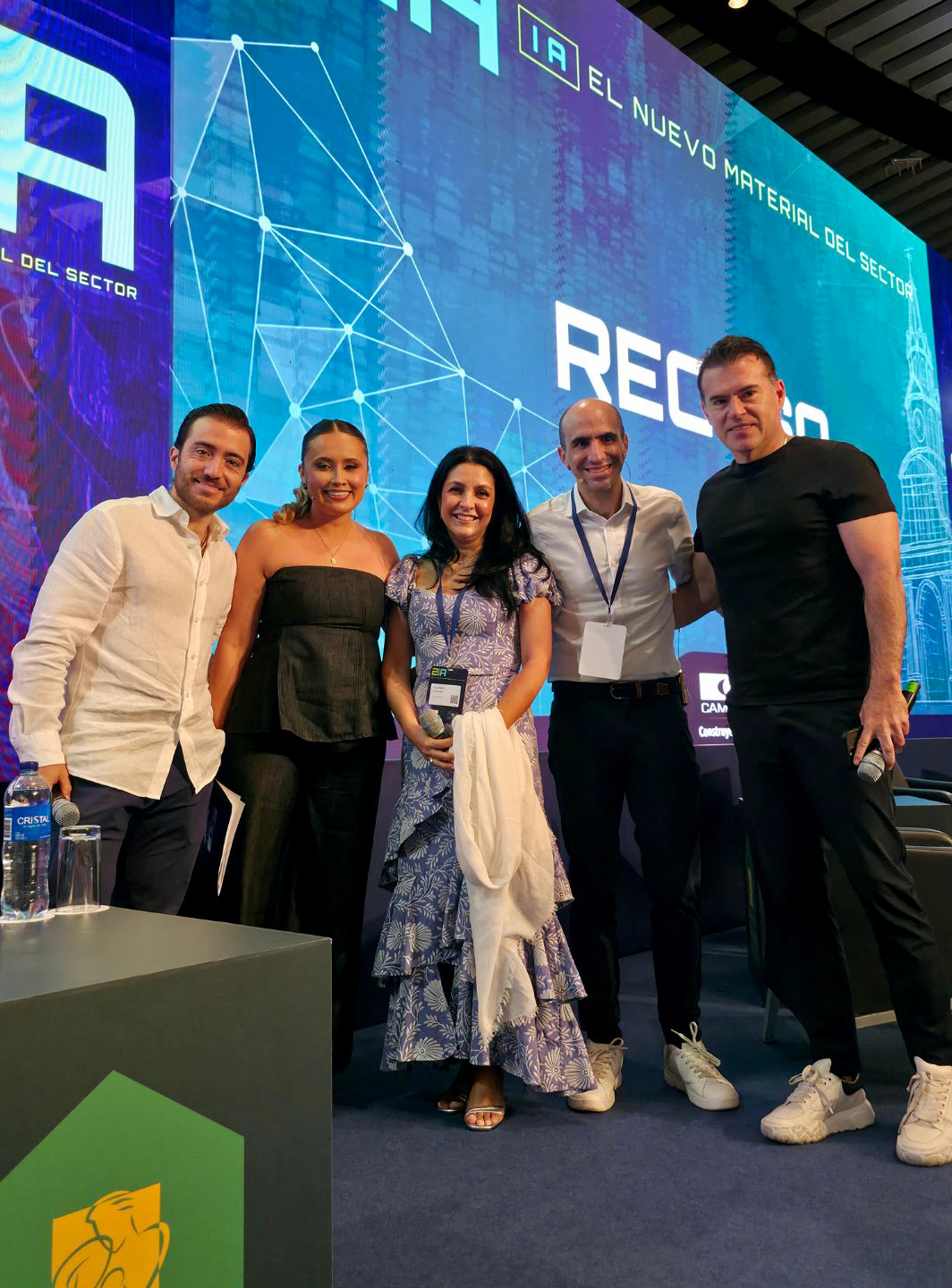
The Second CAMACOL AI Summit brought together leaders from Colombia's construction sector to debate a challenge that goes far beyond adopting new technologies: better understanding processes, making more strategic decisions, and finding the right balance between artificial intelligence and human talent.
Over the past months, artificial intelligence has taken center stage in business conversations. New tools, smart assistants, and solutions appear every week promising to optimize processes, reduce timelines, and transform the way organizations operate. Against that backdrop, it's easy to assume the biggest challenge is choosing the right platform or keeping pace with innovation.
Yet the conversation at the Second CAMACOL AI Summit was different. Rather than presenting AI as an answer to everything, the event surfaced a far more strategic discussion: are construction companies truly ready to implement it?
The distinction may seem subtle, but it completely reframes the conversation. Industry leaders, entrepreneurs, academics, and technology companies all agreed that the real challenge is no longer accessing AI tools—now within reach of virtually any organization—but understanding where they create value, how to integrate them into existing workflows, and how to do so without losing sight of the human judgment that still guides the most important business decisions.
That perspective is reflected in the Roadmap for the Adoption and Implementation of Artificial Intelligence in Colombia's Construction Sector, presented by CAMACOL as a guide for responsible, strategic adoption. The document argues that AI success depends not only on technological innovation but on factors such as data quality, process maturity, talent development, and an organization's ability to lead change.
In other words
Digital transformation in construction companies has shifted from a conversation about technology to a conversation about strategy.
And it was precisely there that one of the event's most anticipated panels left a reflection worth carrying beyond the stage.
Do you truly know the process you want to optimize?
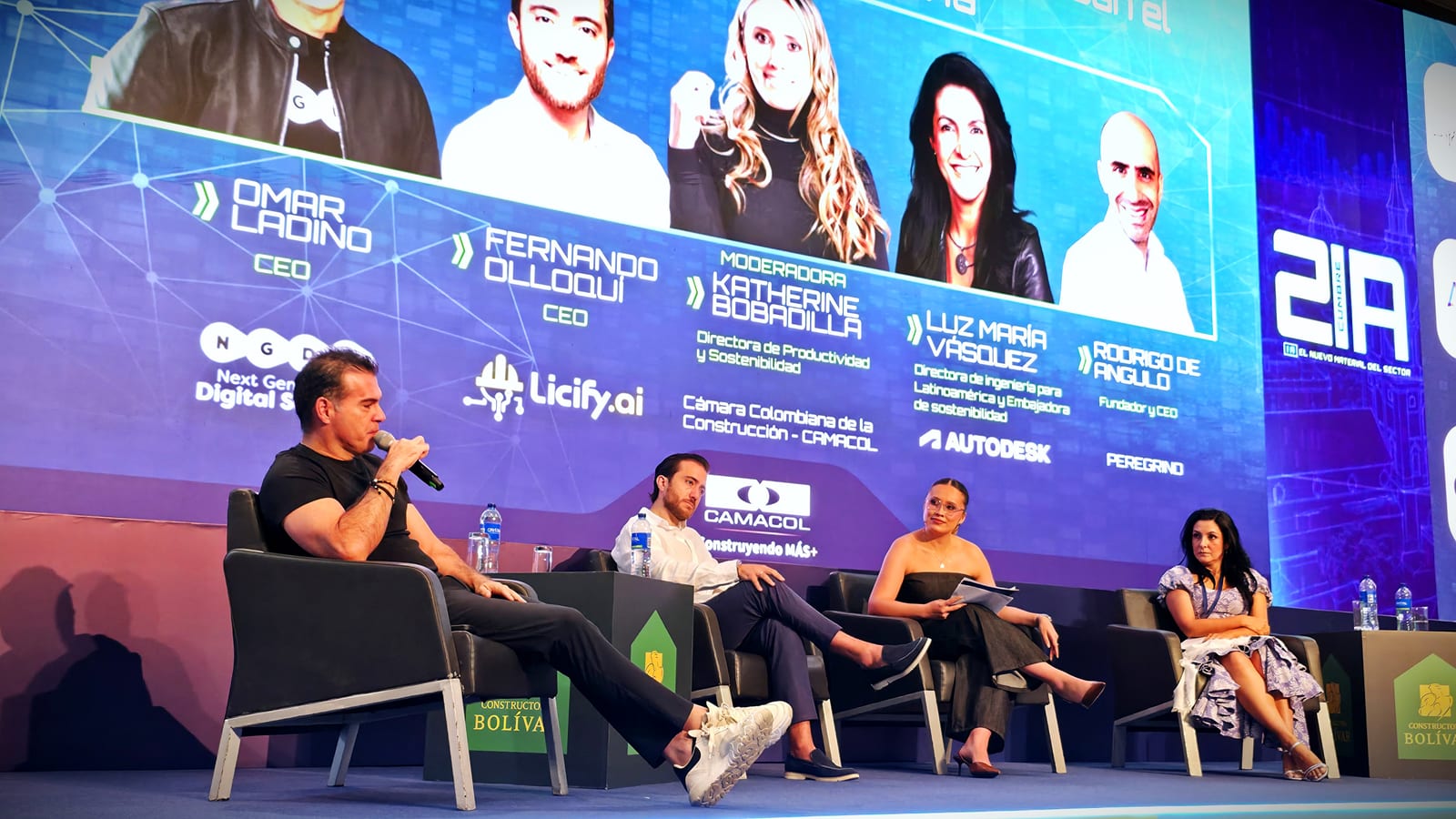
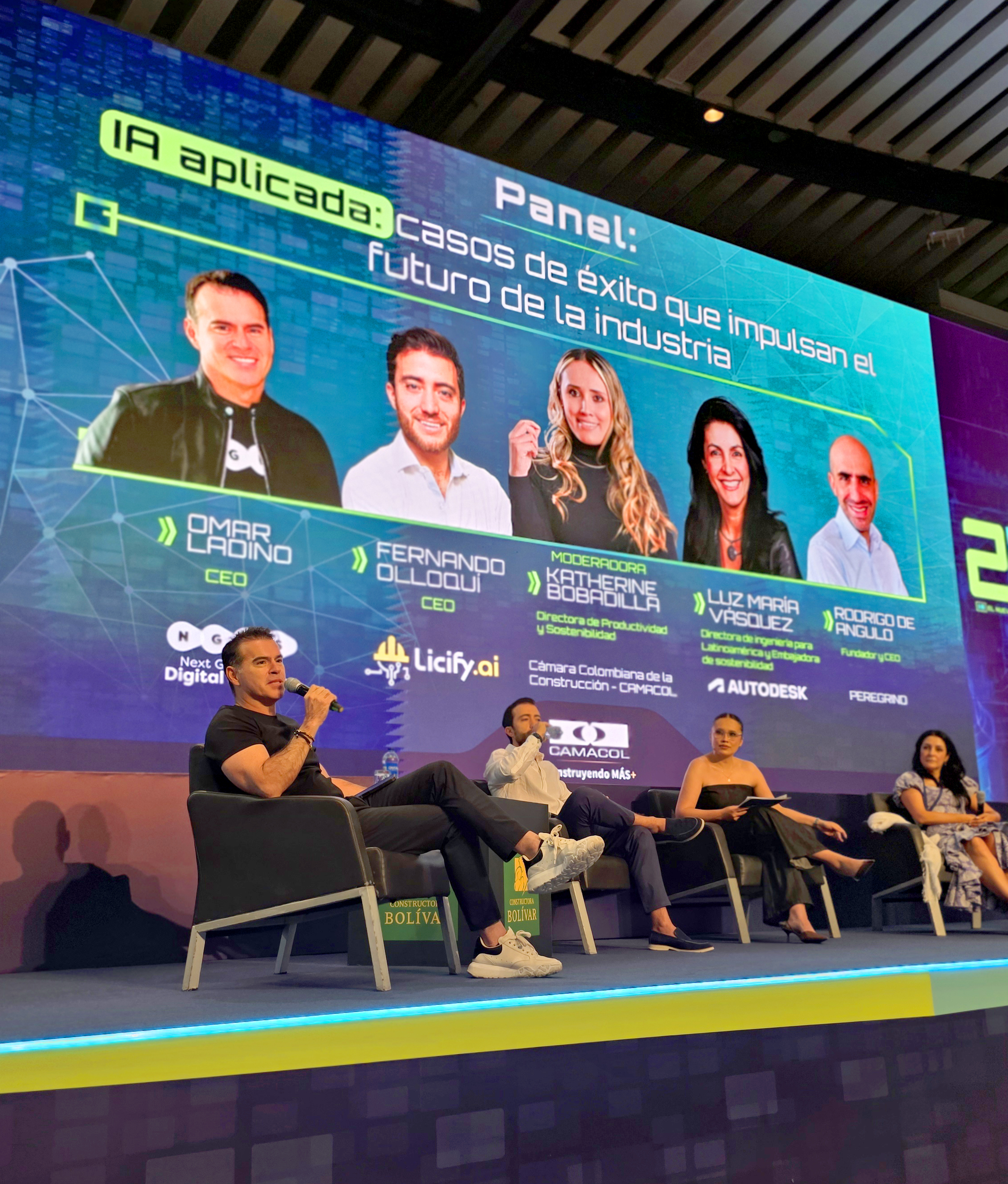
If the discussions during the "Applied AI: Success Stories Driving the Future of the Industry" panel could be summarized in a single question, this would probably be it. It sounds simple—and yet few organizations ask it before launching an AI project for construction companies.
It is common for the conversation to begin by searching for a technological solution—an intelligent assistant, a conversational agent, a platform capable of automating tasks—and rare for the starting point to be a review of the process that needs to change.
That difference is fundamental. Artificial intelligence can analyze information in seconds, identify patterns, and execute repetitive tasks with speed that is hard to match. But there is one thing it cannot do: understand a process that the organization itself does not yet know clearly. If a workflow depends solely on certain people's experience, if information is scattered, if the data is not accurate, or if activities were never documented, automating it does not solve the problem. At best, it makes something that was already inefficient faster.
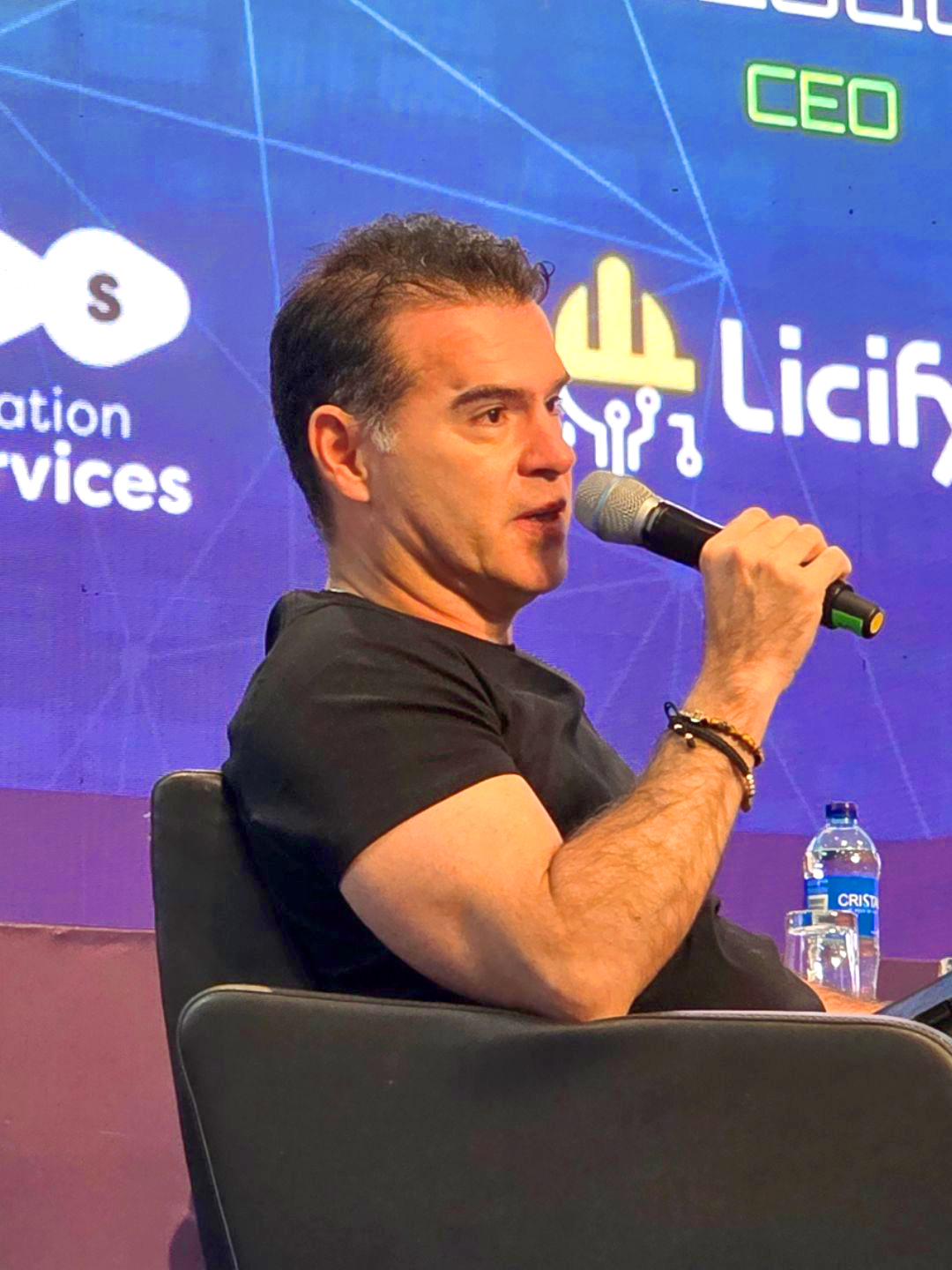
During the panel, Omar Ladino, CEO of NGDS, invited participants to change the order of the conversation. Rather than asking what artificial intelligence can do, he proposed that companies first ask what they need to understand about their business for that technology to have a real impact. Because implementing AI is not simply about adding new tools: it is about making better decisions.
Five questions every company should answer before implementing AI
AI implementation does not begin with choosing a tool; it begins with an organization's ability to deeply understand its own business processes. Before launching any automation project, it is worth answering some questions that can determine the success or failure of the entire strategy:
- Do you truly know the process you want to optimize?
- Which decisions can artificial intelligence handle, and which must continue to depend on human judgment?
- Are you solving a business challenge or simply adopting a new technology?
- Does your data accurately reflect what happens in your operations?
- Is your organization ready to work alongside artificial intelligence?
More than a checklist, these questions are the starting point for a purposeful implementation. They help clarify a reality that ran through every conversation at the summit: artificial intelligence, on its own, does not transform a company. It can accelerate processes, organize large volumes of information, and surface patterns that previously went unnoticed—but its real value depends on the quality of the environment in which it is deployed: clear processes, business context, and reliable data.
Good data yields the true result
That idea shaped one of Omar Ladino's key reflections, summing up one of the biggest challenges in AI adoption in a simple but powerful statement:
"Good data gives you the true result when using AI."
Omar Ladino · CEO of NGDSThe statement is especially relevant in Colombia's construction sector, where each project generates information from multiple fronts: design, planning, procurement, construction execution, oversight, commercial management, customer service, permitting, and operations.
AI learns from that data, connects it, and generates recommendations from it. That is why when information is incomplete, outdated, or does not faithfully represent the company's reality, the problem is not the technology—it is the foundation it is built on. Before asking how advanced a tool is, organizations should ask whether they have reliable data and processes solid enough for that technology to deliver value: the answers AI provides will never be better than the information it learns from.
Which decisions can AI handle and which must remain human?
Artificial intelligence can analyze thousands of data points in seconds, identify patterns, generate recommendations, and even execute repetitive tasks with a level of precision that is hard to match. However, when a decision involves judgment, negotiation, leadership, or accountability for the impact it will have on a project, the human factor remains irreplaceable.
That was one of the most thought-provoking topics at the panel: the conversation has moved away from everything AI is capable of doing, toward a more strategic question—which decisions generate more value when they stay in human hands?
The answer is not about limiting the scope of technology, but about understanding that its true potential emerges when each party takes on the role it is best suited for: artificial intelligence processes information, detects patterns, engages prospects, and speeds up workflows, while people provide context, interpret complex situations, build relationships, and make decisions that require experience and judgment.
In practice, that balance also requires a concrete standard for how much autonomy to grant an AI agent. Not every decision should be delegated, and not every process requires the same level of independence: some activities are repetitive, operational, and easily reversible—where AI can act with greater freedom—while others, due to their economic, legal, or strategic impact, must remain under human oversight.
The goal is not to choose between controlling everything or automating everything, but to let technology contribute speed and efficiency where it creates value while people maintain leadership over decisions that require judgment, experience, and an understanding of context. In the end, implementing artificial intelligence also means learning to trust—but with responsibility.
Conclusion: the future of the construction sector will be built on balance
When the Second CAMACOL AI Summit came to a close, many attendees shared a common feeling: the conversation is no longer about whether artificial intelligence will reach the construction sector. That phase is over. The real challenge is learning to integrate it responsibly, recognizing that each company has a different level of maturity, different processes, and specific needs. There is no single formula, and no platform capable of solving every challenge.
What does exist is an opportunity for organizations to review their processes, strengthen their data quality, and prepare their teams for a new way of working—one in which artificial intelligence becomes a partner rather than an end in itself. Perhaps that is the greatest lesson this edition of the Summit left behind: innovation is not about automating everything, but about knowing what is worth automating and what must continue to depend on people. Real leadership is not about delegating decisions to AI—it is about using technology to make smarter decisions.
More than a closing statement, this is an invitation to the construction sector: to stop asking how quickly it can implement artificial intelligence, and start asking how ready it is to integrate it with strategy, with purpose, and with a vision where technology and people work in the same direction.
Building that balance is not a theoretical exercise
Deciding what to automate, which decisions to hand to an AI agent, and what must still depend on human judgment is not resolved with a single answer: it is a continuous exercise of understanding the business, organizing data, and preparing teams to work differently.
At NGDS we guide construction companies on that path—from process diagnostics to the implementation of AI solutions that truly integrate with human talent, rather than competing with it.
If your company is thinking about taking that step, reach out or visit us at ngds.ai.
Ready to take the next step?
An NGDS expert will reach out to learn about your case and propose a concrete solution.